Wednesday, April 29, 2020

Long form TV Drama – House of Cards

Long form TV Drama – House of Cards
Four aspects of the theoretical framework:
Media language: How the media communicate meanings through their forms, codes, conventions and techniques.
Media representations: How the media portrays events, issues, individuals and social groups
Media industries: How the media industries' processes of production, distribution and circulation affect media forms and platforms.
Media audiences: How media forms target, reach and address audiences, how audiences interpret and respond to them, and how members of audiences become producers themselves.
Drama: TV drama is a broad genre. At its simplest, it is fictionalized action in narrative form.
Long form TV drama: Long Form Drama is a term coined to describe the recent shift of interest towards television series of high quality that many consider to have replaced the cinema as a locus of serious adult entertainment. Unfolding over multiple episodes, hours, and even years, these TV shows are seen to provide a content, often dark and difficult, and an innovative style that strain against the conventions of cinema as well as network television.
Media conventions: A code is a system of signs which can be decoded to create meaning. In media texts, we look at a range of different signs that can be loosely grouped into the following:technical codes - all to do with the way a text is technically constructed - camera angles, framing, typography etc. verbal codes ...
technical codes: all to do with the way a text is technically constructed – camera angles, framing, typography etc.
verbal codes: everything to do with language -either written or spoken
symbolic codes: codes that can be decoded on a mainly connotational level
Genre: A genre is basically the category of any type of art or literature, for example categories of movie would be comedy, horror, thriller etc. 
Genre hybridity: Some media texts are hybrid genres, which means they share the conventions of more than one genre. For example Dr. Who is a sci-fi action-adventure drama and Strictly Come Dancing is a talent, reality and entertainment show verbal codes ...
Synopsis: A brief summary of the major points of a written work.
Barthe narrative codes:
Text may be -
Open: An open narrative is a television programe or a soap opera. The reason for this is because they have no sense of ending and they can go on forever. They also have a lot more characters.
Closed: Closed ending structures is when the story is fully told and complete by the end of the episode. A closed narrative structure is the most common narrative structure found in TV.
Enigma code: The Hermeneutic Code refers to any element of the story that is not fully explained and hence becomes a mystery to the reader.
 • The purpose of the author in this is typically to keep the audience guessing, arresting the enigma, until the final scenes when all is revealed and all loose ends are tied off and closure is achieved.
Semantic code: This code refers to connotation within the story that gives additional meaning over the basic denotative meaning of the word. Any element in a text that suggests a particular, often additional meaning by way of connotation
Main characters:
House of cards follows the legal career of Francis Underwood who is played by Kevin Spacey. From the first episode, it seems that he will continue to be in association with the characters of Zoe Barnes and Peter Russo. The show also features characters Garrick Walker and Linda Vasquez.
Sub-Genres:
House of cards is a political drama and a political thriller which explores the American law system in Washington DC. A political drama is the examination of human conditions within the life of a political person. Political dramas are made dramatic by multiple conventions used in the making of the show. This is mostly due to the show mirroring real life interactions in the law career. 
A genre is set out by multiple conventions such as Mise-en-scene, setting, visual style, Etc. A thriller can be defined as a show that exhilarates the viewer leaving them with breathlessness and excitement as they watch. A thriller has to thrill the audience. Thrillers are often seen through crime shows, mystery shows and physiological shows which often mix together as one show such as in House of cards. Techniques used in thrillers usually include plot twists, mis-direction, pursuits, Etc. Thrillers also have types of characters that make the show what it is, these characters include criminals, menaced people, police, Etc. 
Every genre has a code which is a system of signs which can be decoded to create meaning, the different types of codes include; technical codes (Which is to do with how a text is constructed through use of camera angles, framing, Etc.), verbal codes (Everything to do with language) & symbolic codes.
Some examples of thriller movies include:
- Inception
- Fight club
- Taken
- The Dark Knight
And many more...
House of cards uses these conventions effectively as well as making the show a hybrid of a political thriller and a politician drama. It does this effectively by using the conventions mentioned above for the both genres.
Neales theory
Steve Neale states that genres all contain instances of repetition and difference, difference is essential to the to the economy of the genre.
Steve Neale believes that a film and the genre is defined by how much it conforms to its genres individual conventions and stereotypes, a film must match the genres convention to be identified as a part of the genre. a film is also defined by how much a film subverts its genre conventions and stereotypes, it must subvert its conventions enough to be considered unique.
Identify character roles:
Frank Underwood:
The character wears a suit (Work uniform) in the evening, this suggests that he is a hard working man and works through his whole life not only the time he is at work. Frank is also seen to strangle a dog who is in pain, he takes the matter into his own hands as he believes that his decisions are ones to be followed and abided by, he also shows no signs of distraught or stress in this scene. Frank also addresses the audience of the show by talking straight into the camera, this is a clear indication that he is the main character of the show. Frank is a patriarchal man and has doors opened for him when he walks to show his ideologies of power within. Frank destroys glasses when he is distressed to show that is a destructive and sometimes angry man. 

Thursday, February 13, 2020

Film - Media industries

Film - Media industries
Production - Production is a process of combining various material inputs and immaterial inputs in order to make something for consumption.
Distribution - the process of making a media product available to audiences so that they can consume it, which includes aspects of marketing such as creating an advertising campaign.
Exchange - media of exchange or mediums of exchange. Something, such as a precious metal, that is commonly used in a specific area or among a certain group of people as money.


The Jungle Book (1967) is comparable to The Jungle Book (2016). According to the OCR specification: The Jungle Book (2016) has taken over 1 billion US dollars already at the cinema box office alone (and will generate more income as a DVD/Blu-ray disc and online). The film has a clear pattern of production, distribution and circulation that can be easily distinguished and is a film production from a major studio.


The Jungle Book (1967) is a historically significant media product and film text. The 1967 film is currently one of the most successful films of all time (it has taken over 100 billion US dollars) and followed a traditional pattern of production, distribution and circulation, although it enjoyed a ‘second life’ on video and DVD.


The jungle book, at the time, was using advanced technology to create these animated films. they were created using:
- Traditional cel-animation
- Pioneering the art of storyboarding
- Developing the use of the multiplane to create an early 3D-like effect

The jungle book cost £4 million to make and made £100 billion back.

The Jungle Book (2016) was a reboot of the original movie which is more accurate to the book. This
was a live action movie made using CGI and lots of technology. This was created by MPC - Moving
Picture Company using their range of technology as shown in the blog. This was made over three
years from concept to finished product. It was released in april to july 2016 which coincided with
summer time meaning it linked with childrens and families times, it was released over 70 national
countries. The film released in RealD 3D, IMAX, IMAX 3D which lead to an opening figuire of 20.4
million dollars for a PG rated film. The overall success grossed the film making over 966 million
dollars. This reboot reached a range of audiences as it was a reboot of  an older audiences childhood
film, this would make them want their children to watch it, therefore they would take them, aswell as
wanting to see it aswell. As it is a kids film, children would also independently want to watch it as it
is marketed widely.

Disney
Disney is a multi national company who own multiple companies, this makes them horizontally
intergated. They have theme parks over the world which helps them make money aswell as market
their films. Disney use their owned companies to distribute/market their movies, this means they do
not have to outsource to companies. however, Disney liscensed other companies to se their movie
themes to sell their individual products, Etc. These may include companies such as McDonalds
creating happy meal toys in order to increase sales of happy meals.

MPC - Moving Picture Company
Technology
Tessa - Digital Asset management systems: gives production a pipeline to track, automate and organize novements of didigtal assets. Tessa helps to ensure assets travel seamlessly betweens sites departments and artists. tessa is a management system for assets used between artists which ensures the right assets reach the right location at the right time. Artists are able to control which assets are available to different departments.
Image result for jungle book poster 2016Genesis - Virtual production platform: Virtual production enables film makers to make better creative choices in the production process, which leads to better quality.


Distribution & Marketing
Disney use subsential comopanies owned by Disney which
cuts the cost of outsourcing. Disney licensed companies to
allow them to use their movies for advertising their own
products such as McDonalds happy meals, Etc. They also
use celebrity endorsement as they have famous actors
in the movie which they use for posters, Etc.


Explain how films can be marketed to become global brands. Refer to The Jungle Book in your answer.
The success of The Jungle Book shows how Films can become
global brands. It shows that films are not only marketed using
the film but multiple other distribution methods aswell. The Jungle Book was originally a childrens
book released in 1894 which was adapted into an animated film in 1967 by the already successful
film company disney, and grossed over $100 billion overall even with the lack of internet in that
time, it was easier to have a popular movie in that time as the lack of competition was used to their
advantage, with the films budgetbeing around $4 million, The film has a 7.6IMDb rating. It is also
estimated to be the 29th highest grossing film of all time in the United States, It was also the last film
to be oversaw by Walt Disney as he unfortunately died during the production. The Jungle Book
(1967)'s soundtrack was a large factor in its success using songs such as "The Bare Necessities" and
"I Wanna Be Like You" which achieved a gold disc status in the USA. The Jungle Book (1967) was a
classic animated film that grossed a lot of money in cinema. However, this was not the only way the
film was turnt into a global brand. by the time The Jungle Book was originally released, Disney was
already a successful film company who were diversifying into theme parks (Disneyland,
Disneyworld, Etc.), Television and merchandise. at this time of Disney's rise to the top of the
industry, they had their distribution arm, Buena Vista, set up these. With the Baby Boom of the
1950s, Disney's reaction was to expand into home entertainment. The Jungle Book originally released
in October time and grossed nearly $24 million on its first worldwide release. The Jungle Book was a
very sucessful film therefore it was rereleased in cinemas in the USA in 1978, 1984, 1990 and was
streamed in cinemas in europe through the 1980s. the film also had a very strong impact on home
entertainment, the film totalled 14.8 million copies sold from a Walt Disney Classic collection with
the audience being the new younger audience and since then has been rereleased multiple times but is
now a widely available film on platforms such as netlix and sky. This is known as the longevity of
sales, each time it translates an animation classic via the latest media technology, it makes it available
in a new format for the company to capture the next genration who then commit to the brand loyalty.
The total gross for the movie alone is $205 million wordwide. Lots of companies use Vertical
Intergration (When a media company owns different businesses in the same chain of production and
distribution to create multiple selling points) to control and maximise efficiency of the
distribution/marketing of a product. This is not just for films, but for television, music, merchandie
and theme parks in disneys case. This shows that Media Synergy (Media Synergy arises when the
combined effect of a number of media activities is greater than the sum of their individial effects.) can
support a continuous growth of a film which promotes horizontal intergation (When a media
company creates a chain of goods or services across different divisions, often subsidiaries of the
same company or a licensng deal over a brand or product.) across media and business interests, for
example, Disneys theme parks and stores. The jungle book represents how important these themes
are to distribution of media products as their characters reoccur in Disney's theme parks and disney
stores. Films do not only make money out of cinema, in fact it is quite difficult to only make profit
off of cinema sales. This is because there is so many other media platforms the film can be sold by,
for example, through merchandising. The film industry is an expensive business which most the time
relies on economuses of scale to make money. When a business owns ands controls a wide range of
companies it is known as a conglomerate, which helps the company mae money and keep  an
advantage on their competitors. Disney have a great advantage on their competitors as they are highly
successful conglomerates, Disney own multiple companies and brands that give them the advantage
and ability to make global brands for films. Disney owns multiple companies in television such as,
ESPN, Disney Channel, ABC, and more which help them to distribute their movies over a wide range
of audience and people, this is also done by Disneys ownership of streaming services such as
Bamtech and Hulu. Altough ESPN and Bamtech are sports based, any advertising used on these
services still help movies become more global and allow audiences to see this and watch the movies.
For example, sports are more often watched by older males who may or may not have children, in the
case of The Jungle Book (2016), Adults may have childhood memories of the 1967 version of the
movie as it was redistributed multiple times in its run before the reboot, this may give them the idea
for their children to watch the movie. Disney are seen as practising both vertical intergration as they
own multiple business in the same chain of production, for example they own various film
organisations such as Marvel, Fox, Lucasfilm, Pixar, Etc. which helps them maximise revenue aswell
as improve their global brand. Disney are also seen as practising horizontal intergration as they
control multiple services and companies across different divisions which help them to make their
brands global instead of in one chain of production, For example their control of film companies,
streaming services and television companies allow them to expand their brand. Disney state that
streaming services will be an important factor in the future in relation to the delivery and distribution
of content, therefore their investment in the two brands will further their control of being able to
make global brands in the industry. The Jungle Book (2016) is another Disney made movies directed
by Jon Favreau, who previously directed iron man movies. The movie is a live action reboot of the
fantasy adventure story with a more sinister approach of the original book and took around 3 years to
make from concept to final product. Disneys newer approach was  used to attract a wider audience
through which an older audience could enjoy. This was largely due to the large amount of CGI
animation as well as the casting of established actors such as Scarlett Johansson and Ben Kingsley for
the voices of the CGI characters with one child actor to play Mowgli, which helped attract an older
audience, this is called celebrity endoresement. The large amount of CGI aswell as the high level
actors made the budget of the film a lot higher than the original 1967 movie, the 2016 movie came to
a budget of around $175 milion. which lead to it making $100 million in the opening weekend (USA)
and then grossed over $950 million worldwide, this is significantly more than the original made with
the movie getting a 7.5 IMBd rating which is slightly lower than the original which is likely due to
the change in media in time, It is a lot easier to access the merket now than it was in 1967. Disney
were able to market the new movie using more modern methods such as Youtube, Twitter, Etc. which
had the internet spreading the word which is a lot easier to do now as compared to 1967. Disney held
fan events for sneak peeks of the movie aswell as having the actors announced to get fans excited for
the movie to release. Disney could also use their theme parks as advertising methods as they shaped
sand into the characters of the movie on their ride 'Animal Kingdom', which got fans sharing pictures
across the internet, this is known as 'word of motuh marketing'. the film also had its own snapchat
filter for fans to use. Live action remakes are very popular in this time as it gives fans 'nostalgia' of
the original movies/books aswell as bringing in a brand new younger audience.With Disney working
alongside other media companies, the benefits of cross promotion are doubled. Disney can make
deals for TV and film spin offs which leads to more profits, such as a 2020 sequel to the 2016 movie
or they could use their new platform 'Disney Plus'. With Disneys subsidiary companies, they are able
to distrubute the film with no cost to another company which increases profits and keeps money
flowing. Disney are also able to license other companies to produce merchandise relating directly to
the film which make non film revenues. This shows that Disney is a both horizontally intergrated
company aswell as a vertically intergated company.


       Refer to advances in technology in your answer.
Technology in film is constantly advancing and improving to fit modern film types. The technology
used in production in 1967 for The Jungle Book was said to be ground breaking, However with
modern technology advances, the old technology was nothing in comparison, The Jungle Book
(1967) used traditional cel-animation which used a transparent sheet of which objects and characters
were drawn/painted on to make a 2D animation (3D-like) and was seen as the pioneer in the art of
storyboarding at the time. The production of The Jungle Book costed Walt Disney Studios around $4
million to make and was seen as a high cost and top quality film in its day. The animation appears a
bit dated, in large part because it appears to use the Xeroxing method, but that doesn't detract from
the great story Disney had created, or the voice actors who added life to this movie. The film is only
78 minutes long which may be surprising to a modern audience as we are now used to films being
closer to 2 hours onwards. This may be partly to production costs and cinema running availability as
the film would have only been shown in the cinemas at first as any people didn't have televisions yet
so producing DVDs would be pointless. Disney then made a 2016 reboot with a high level of CGI
to attract an older audience, which was done by MPC (Moving Picture Company) who did the
animation of the animals and landscape with their modern CGI technology. The reboot idea had been
used before by Disney which was sometimes unsuccesful with movies such as John Carter and The
Lone Ranger, however were often succesful with movies such as beauty and the beast, Dumbo and
Cinderella. Disney chose to make a high CGI movie as modern audiences are increasingly more
engaging with CGI content, this is shown with movies such as Transformers, Avatar, Avengers, Etc.
The time was right for Disney to make a CGI remake of The Jungle Book. The proliferation (A rapid
and widespread increase in the use of technology) of digital technology in the film industry is
constantly driving film production up.


Thursday, December 5, 2019

Advertising & Marketing

Advertising & Marketing
Media language: How the media through their forms, codes, conventions and techniques communicate meaning.
Representations: How the media portray event issues, individuals and social groups.
Individualism: What makes a person unique
Consumerism: What makes a consumer buy the product.


Conventions of Genres:
- Camera
- Editing
- Sound
- Mise en scene (the arrangement of the scenery, props, etc. on the stage of a theatrical production or on the set of a film)


Social context: Where people live together and interact with one-another on a day-to-day basis. Social strcutures include; Religion, education, family, media, communications, law and government.
Cultural context: The atitudes, values, beliefs, practices, customs and shared behaviour. Includes aspects of 'life': language, products, things we do and how we do it. Also includes products such as; Art, music, literature & media.


Marketing: is the process of preparing a product for the marketplace.  Advertising is one of several components used in the marketing strategy.
Advertising: is the process of making a product or service known to the market and the target audience.

Three main areas of marketing and advetising:
- Codes & Conventions*
- Genre
- Constructing and interpreting meaning

Conventions in print advertising:*


Technical Conventions:


Logo - Tells the audience which brand or company is selling the product.
Slogan - A short and catchy phrase associated with a product or person.
Product image - Shows the audience what the company/brand is selling. (Pack shot)
Font size - The size of written text on the advert indicates a hierachy of importance in what is read on the page.
Typeface/font style* - Different font styles evoke different meanings and attract different audiences.
Shot types and angles - Camera work, distance and angles used to capture models and products.
Composition & layout - The way in which all elements in the ad are organised, how the text, images and products are positioned.
Rule of thirds - The page/advert is divided into three sections vertically and horixontally. The main attractions will usually take up 2/3 of the page or at least a central section.
Colour pallete - The use of colours in the advert's design to create a feeling in responseto the product.
Special effects - Effects that are achieved when editing the advert and are used to provide greater emphasis by the product/message.
Props - Anything seen within the frame that is movable or portable. provides realism and gives additional meaning.
Locations & settings - Locations refers to the geographical place in which an advert is located.
Costume & make up - What the models/ actors are wearing and how they appear. Helps create a sense of realism, mood or feeling.
Mode of address - The way the advert talks to the audience. May be informal, formal, fun or serious, Etc.
Anchorage - The juxtaposition of written text within an image. Placement of writing and images influence how we understand the image.
Intertextuality - Reference to another media product that prodivdes additional meaning to the advert. This could include reference to a media celebrity.


Techniques to persuade:
Persuasive language -  Wording that encouragesthe audience to purchasethe product or service.
Scientific or statistical claim - Scientific proof or experience
Unfinished comparison or claim - Use of phrases that arent finished so cannot fully compare.
Humour - Play on words and exaggerated siuations can be used to create humour.
Beauty appeal - Use of beautiful places, people and things appeal to audiences aspiration.
Lifestyle - the product is associated with a particular style of living or ways of doing things.
Escape - The idea of getting away from everything for adventure.
Celebrity endoresement - Associates a product with a well known figure, people will buy the product as respect for the figure.
Fear - Some advertisers use fear to create worry that will not be around with this product.


Different font styles:*
- Funny Font  (Default)
- Formal Font (Large)
- Artistic Font (Largest)


Caged:
C - Class (Social)
A - Age
G - Gender
E - Ethnicity
D - Disability


Denotation Vs. Connotation:
A denotation is the literal meaning of each of the different signs you can see in the advert, for example, In the case of an aftershave advert, a denotation would be that it is a middle-ages white mean in a suit putting aftershave on. Where as a connotation is the additional meaning or implications of meaning created by each sign, In the same case, a connotation would be that it is a succesful businessman wearing aftershave to make him more powerful.


Representation in adverts:
"You mean a woman can open it...?" (Ketchup)
This is a negative stereotype of women being weak. This advert was most likely created by a man, this may have contributed to the stereotype as producers of adverts are usualluy part of a dominant social group, This makes the producers bias as they are in the dominant social group (If they are men, most likely are). This representation could reinforce the producers own experience and values.


"Can she make you lose control?" (LYNX)
The advert May reinforce the stereotype that women are sexual objects. However, some people may argue that it is justified as they are consenting to this advertising and being paid. Some people will still argue that it is unethical as it may put bad stereotypes on women aswell as making women that are not models jealous, this could lead to body dismorthia as they want to look like the models. the advert states that seeing models will make you lose control which could lead to sweating, this is how it links to a doedorant advert, the deodorant will last up to 48 hours.


Colour theory (Colour wheel):
On a colour wheel, analagous colours are colours that link together as shades of colours, usually next to each other on the wheel. Where as complementary colours are colours that are opposite on the colour wheel, this will make the product or advertisement stand out.
See the source image


Representations require interpretations
Producers will aim to construct a preffered meaning to an advert, it will usually be to persuade an audience to buy the product, audiences may respond in different ways (They agree with the meaning and buy the product (preffered or dominant), They accept the meaning but may not buy the product (Negotiated), They reject the message and will not buy the product (Oppositional)).


In the case of the Lucozade advert, different responses will come from audiences with different situations. For example, An able bodied man will most likely have 2 of the 3 responses, alot of men have the desire to be fit and healthy even if they will never do anything about it, Some men will see the advert and use it to help them exercise yet may also see the advert and buy the product in the hopes that it will hydrates them or just give them a nice drink, even if they are not using it for excercise. these are examples of  Dominant or preffered responses. However, an able bodied man may also see the advert and accpet the meaning, but they will not buy the product as either they do not like the taste or know that they do not excercise often, This is an example of a Negotiated response. it is less likely, but some males may see the advert and decide that it is a negative stereotype that they do not agree with and decide not to buy the product, this is an example of a Oppositional response.


A woman may see the advert, accept the meaning and buy the product, they may not care about any sterotypes portrayed, they may agree with the stereotype or they may disagree with the meaning yet still buy the product because they like it, this is an example of Dominant or Preffered responses. A woman may also see the advert and have the same response as mentioned before yet decide not to buy the product, this could be becasue they dont like the taste or other reasons, this is an example of Negotiated responses. Women may see the advert and disagree with the message and decide not to buy the product, this may be because they are unaccepting of any negative stereotype placed towards men dominating sports and football. This is an example of a Oppositional response.


A physically disabled man may


Old Spice: 'The man your man could smell like' (https://youtu.be/owGykVbfgUE)
Stereotypes represented:
Male -
- Physique
- Strength
- Independant
- Power
- Sexual attractiveness
Race -
- Exotic
- Humurous
   - Sports-person
   - Comedians
   - Promiscuous
Shelter UK
Shelter helps millions of people every year struggling with bad housing or homelessness. With their advice, support and legal services, they campaign to make sure that, one day, no one will have to turn to them for help.
Brand new analysis from shelter shows that 320,000 people in britain are homeless. In the last year it has increased by 13,000. This means 1 in 200 people are homeless. With 170,000 of the homeless people being based in London. meaning there is 1 in 52 people without a home.
Homelessness does not come out of nowhere, there are many fctors that lead to a person losing their home. This includes; Austreity (The cut of funding to housing), People cant return to their home as they are afraid of violence or abuse & people who suffer from mental health arent able to make the money to pay their rent.
Viewspoints and ideology:
When people see homeless people in struggles, different people in different situations seem to have different views on them. The advert suggests that people of reasonable social power have a duty to support those in need. The advert also suggests the idology that every person has a right to 'self-fulfilment' and a better life. Shelter puts this information into adverts as there in the ideology that people consume messages to create empathy which persuades them to support those in need.
The preffered meaning of the advert is to show audiences that it could happen to anyone for many reasons. This makes us feel empathy as we realise how unlucky those arew which leads us to support Shelter.
Different people have different reactions. Such as, A middle class women could possibly have a dominant reaction which means that she accepts the message supports it, as she realises she is lucky and empathises towards those in need, or she could have a negotiated reactions where she accepts the message but chooses not to support it as her viewpoint is mixed. It is not a likely, but she could have a oppositional reaction,

Tuesday, November 26, 2019

Magazine Cover research

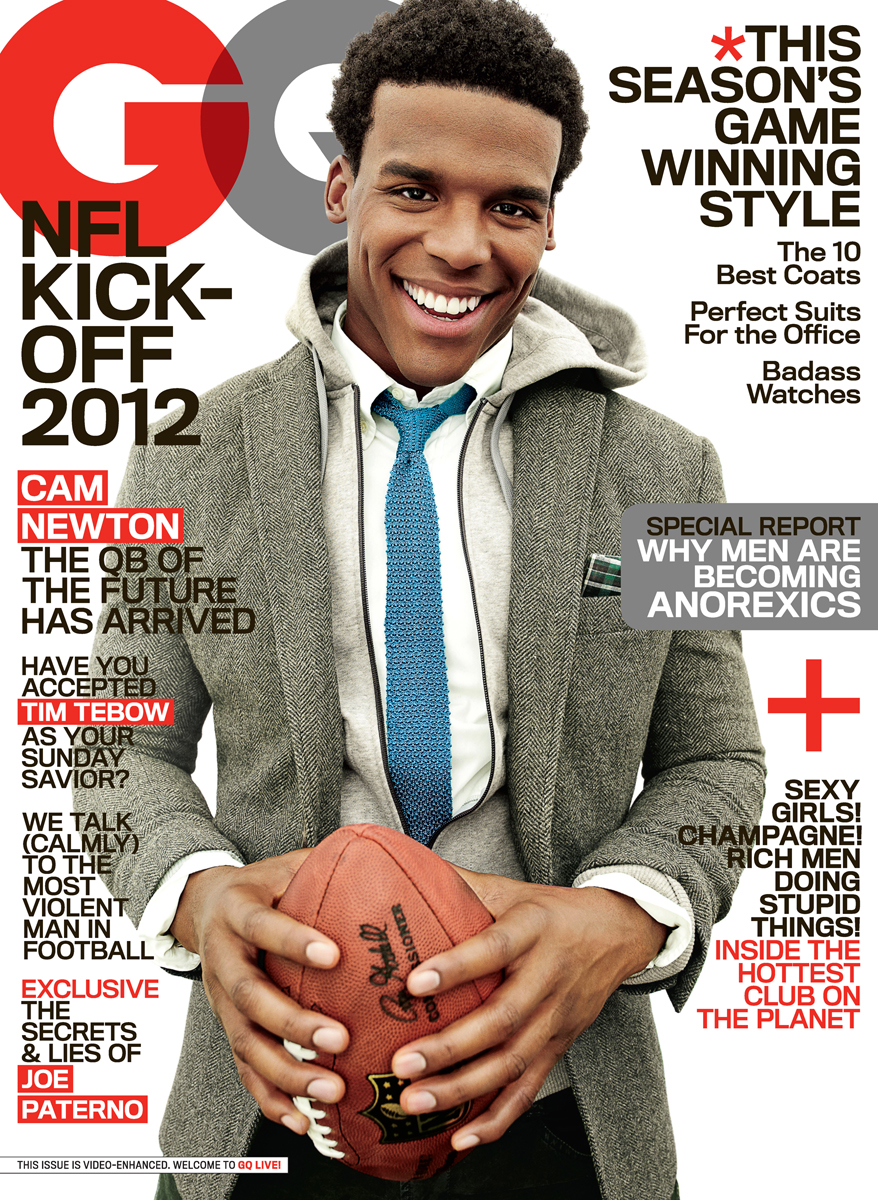
See the source imageMagazine cover research:
This GQ magazine shows a magazine that includes different articles about; NFL Football, Styling coats, Male anorexics, "Sexy girls with champagne!" and more. It takes a colour scheme of red, white and grey throughout the text on the cover, This is to reel audiences in through bright, coded colours, they managed the colour scheme well which readers will find aesthetically pleasing and may contribute to readers buying the magazine.

Thursday, November 21, 2019

News and Online Media Quiz


Online News and Media Quiz (Taylor Lyons) 14/11/2019


    1. Production: the process of making a media product. Every industry has its own forms of production. 3
    2. Distribution: the process of making a media product available to audiences so that they can consume it, which includes aspects of marketing such as creating advertising campaigns. 3
    3. Circulation: The number of newspapers that have been distributed but not sold. Circulation figures are important as they are used to set advertising rates. 3


2. The typical turnaround time for print news is around 24 hours. 3


3. In the last 19 years, circulation figures have dropped significantly, this is because of the growth of online and digital media, this is commonly known as Web 2.0. In the last decade, the Sun has declined circulation figures at -9%. This is due to news being widely available online instead of newspapers. 0


The Guardian declines 75%


The Independent declines 100%


4. Wealthy Owners/Proprietors (Usually own media outlets and have power for shaping opinions using the media.) 3


5. Scott Hugh, He is the CEO of the Guardian.  0


  The Barclay brothers/Rupert Murdoch


6.  The Barclays Brothers own TDGM which own the daily mail, the daily mirror, and more. They have the power to shape public opinion using media and are very wealthy. They can be seen as media barons. 3


7. The daily mail & The guardian. 0


  News Uk


  DMG Media


8. Both newspapers are involved in political events and have the power the shape opinions and mock other Parties. The daily mail is a far right wing newspaper, this means that they are biased towards the conservatives and UKIP, This leads them to make stories that make readers in favour of the right wing. This causes a political affiliation as The Guardian are a left wing newspaper that are in favour of the labour party and mildly communist. 0


9. Socialism is a political and economic theory of social organization which advocates that the means of production, distribution, and exchange should be owned or regulated by the community as a whole. 5


10. Capitalism is an economic and political system in which a country's trade and industry are controlled by private owners for profit, rather than by the state. 5


11. Newspapers owners and organisations are aware of their ability to shape the public opinion with their say. A newspaper that favours right wing can mock any left wing views to make the readers think that the right wing is the party to vote for and be in favour for, this has a big impact on any political events. The same can be done by any left wing favoured newspapers. The newspapers are able to ‘Cultivate’ different views in any political sense or with other topics that are not political. 3


12. The Guardian’s print subscription cost is £5.99/Month. 3


  £11.99


13. The Mail’s print subscription is £10.99/Month, and it has no digital subscription. 3


14. The Guardians newspaper print cost is £2 while the Mail’s newspaper print cost is 65p. 0


  Guardian = £.20


  Daily Mail = 70p


15. Modern print news is created using a method called offset printing. Offset printing is a commonly used printing technique in which the inked image is transferred from a plate to a rubber blanket, then to the printing surface. They require large amounts of material. This method requires highly skilled and trained employees. 1


Thursday, October 10, 2019

Radio Station Research

Radio Station Research (Homework)
"I will research 2 radio stations targetted for young and older audiences and define how the content is different by program presenter and music types. Where possible, I will use uses and gratification."


Capital FM:
See the source imageCapital is a modern radio station that is mostly listened to by audiences of a young age because it has very lively presenters.
 - Capital breakfast includes Roman Kemp, Vick Hope & Sonny Jay
 - Will Manning
 - Aimee Vivian
 - Ant Payne
 - Jimmy Hill
 - Marvin Humes
 - Lauren Layfield
 - JJ
 - The Bassman
 - Will Cozen
 - Rob Howard

Classic FM
Classic FM:
Classic is an old-school radio station that plays classical music and tends to be listened to by the older generation as classical music is harder to find nowadays as there arent many classical artists that still make music today. It also can be listened to by younger people but this is not very regular as younger people are more interested in popular modern music, This not a stereotype but a fact as Capital FM is very popular with younger people where as Classic FM does not have too many viewers and very rarely are they younger people.

Radio consumption survey analysis

Radio consumption survey analysis
How old are you?
41% of the people who took the survey are from 13-17 years old. This is because the survey was mostly sent to friends around our age.


What gender do you identify with?
57% of the people are also female (Compared to 42% male) because there is only 1 male in our group so the survey was sent to their friends which are mostly female.

What is your ethnicity?
88% of the people are White British as most of the friends/family of the group are White british.
What is your region?
57% of the people who took the survey are from Essex becasue we are mostly all based in Essex which means our friends or family that were sent the survey are mostly near.
Which of these applies to you? (What social class are you?)
The majority of the people are working class (48%) or middle class (45%). This may relate to people not being able to afford different methods of listenig to music. But most likely, It is because there is a higher percentage of people in the working or middle class in the UK.

Do you listen to the radio?
81% of people who took the survey listen to the radio compared to 19% who don't. These answers could have multiple different reasons.
If Yes, What station primarily? (What radio stations do you listen to?)
Heart radio is the most popular station from this survey at 16%. With Capital next at 13% and Radio 1 at 10%. This is mosty likely becasue these are the most known/popular stations becasue they play popular music that a majority of people like.
How do you listen to the radio primarily? (What method? Car, Phone, Etc.)
The majority (66%) of people listen to the radio in the car, This most likely becasue most cars have radios built in, even old cars, and people would rather let the radio play music rather than take the ffort to choose songs for their journey. However, people do this very often, this is most likely what the 12% of people who put 'I dont listen to the radio' like to do instead.
How often do you listen to the Radio?
The options 'Every day' and 'A few times a week' are tied at 33% as this is most likely the amount of time people spend in a car as that was the most popular option in the previous question and matches up with how often people regularly use their car or are in their parents car.
If you do not listen to the radio, Why?
The majority of people (73%) put 'i do listen to the radio' which matches with previous results. I think that the people who use 'Alternative mtehods' (27%) are the ones who will put the effort in to listen to their own music, This may be becasue they just really like music, or they have the extra money to use different methods, however this is unlikely because alternatives to radio are not very expensive.