Thursday, December 5, 2019

Advertising & Marketing

Advertising & Marketing
Media language: How the media through their forms, codes, conventions and techniques communicate meaning.
Representations: How the media portray event issues, individuals and social groups.
Individualism: What makes a person unique
Consumerism: What makes a consumer buy the product.


Conventions of Genres:
- Camera
- Editing
- Sound
- Mise en scene (the arrangement of the scenery, props, etc. on the stage of a theatrical production or on the set of a film)


Social context: Where people live together and interact with one-another on a day-to-day basis. Social strcutures include; Religion, education, family, media, communications, law and government.
Cultural context: The atitudes, values, beliefs, practices, customs and shared behaviour. Includes aspects of 'life': language, products, things we do and how we do it. Also includes products such as; Art, music, literature & media.


Marketing: is the process of preparing a product for the marketplace.  Advertising is one of several components used in the marketing strategy.
Advertising: is the process of making a product or service known to the market and the target audience.

Three main areas of marketing and advetising:
- Codes & Conventions*
- Genre
- Constructing and interpreting meaning

Conventions in print advertising:*


Technical Conventions:


Logo - Tells the audience which brand or company is selling the product.
Slogan - A short and catchy phrase associated with a product or person.
Product image - Shows the audience what the company/brand is selling. (Pack shot)
Font size - The size of written text on the advert indicates a hierachy of importance in what is read on the page.
Typeface/font style* - Different font styles evoke different meanings and attract different audiences.
Shot types and angles - Camera work, distance and angles used to capture models and products.
Composition & layout - The way in which all elements in the ad are organised, how the text, images and products are positioned.
Rule of thirds - The page/advert is divided into three sections vertically and horixontally. The main attractions will usually take up 2/3 of the page or at least a central section.
Colour pallete - The use of colours in the advert's design to create a feeling in responseto the product.
Special effects - Effects that are achieved when editing the advert and are used to provide greater emphasis by the product/message.
Props - Anything seen within the frame that is movable or portable. provides realism and gives additional meaning.
Locations & settings - Locations refers to the geographical place in which an advert is located.
Costume & make up - What the models/ actors are wearing and how they appear. Helps create a sense of realism, mood or feeling.
Mode of address - The way the advert talks to the audience. May be informal, formal, fun or serious, Etc.
Anchorage - The juxtaposition of written text within an image. Placement of writing and images influence how we understand the image.
Intertextuality - Reference to another media product that prodivdes additional meaning to the advert. This could include reference to a media celebrity.


Techniques to persuade:
Persuasive language -  Wording that encouragesthe audience to purchasethe product or service.
Scientific or statistical claim - Scientific proof or experience
Unfinished comparison or claim - Use of phrases that arent finished so cannot fully compare.
Humour - Play on words and exaggerated siuations can be used to create humour.
Beauty appeal - Use of beautiful places, people and things appeal to audiences aspiration.
Lifestyle - the product is associated with a particular style of living or ways of doing things.
Escape - The idea of getting away from everything for adventure.
Celebrity endoresement - Associates a product with a well known figure, people will buy the product as respect for the figure.
Fear - Some advertisers use fear to create worry that will not be around with this product.


Different font styles:*
- Funny Font  (Default)
- Formal Font (Large)
- Artistic Font (Largest)


Caged:
C - Class (Social)
A - Age
G - Gender
E - Ethnicity
D - Disability


Denotation Vs. Connotation:
A denotation is the literal meaning of each of the different signs you can see in the advert, for example, In the case of an aftershave advert, a denotation would be that it is a middle-ages white mean in a suit putting aftershave on. Where as a connotation is the additional meaning or implications of meaning created by each sign, In the same case, a connotation would be that it is a succesful businessman wearing aftershave to make him more powerful.


Representation in adverts:
"You mean a woman can open it...?" (Ketchup)
This is a negative stereotype of women being weak. This advert was most likely created by a man, this may have contributed to the stereotype as producers of adverts are usualluy part of a dominant social group, This makes the producers bias as they are in the dominant social group (If they are men, most likely are). This representation could reinforce the producers own experience and values.


"Can she make you lose control?" (LYNX)
The advert May reinforce the stereotype that women are sexual objects. However, some people may argue that it is justified as they are consenting to this advertising and being paid. Some people will still argue that it is unethical as it may put bad stereotypes on women aswell as making women that are not models jealous, this could lead to body dismorthia as they want to look like the models. the advert states that seeing models will make you lose control which could lead to sweating, this is how it links to a doedorant advert, the deodorant will last up to 48 hours.


Colour theory (Colour wheel):
On a colour wheel, analagous colours are colours that link together as shades of colours, usually next to each other on the wheel. Where as complementary colours are colours that are opposite on the colour wheel, this will make the product or advertisement stand out.
See the source image


Representations require interpretations
Producers will aim to construct a preffered meaning to an advert, it will usually be to persuade an audience to buy the product, audiences may respond in different ways (They agree with the meaning and buy the product (preffered or dominant), They accept the meaning but may not buy the product (Negotiated), They reject the message and will not buy the product (Oppositional)).


In the case of the Lucozade advert, different responses will come from audiences with different situations. For example, An able bodied man will most likely have 2 of the 3 responses, alot of men have the desire to be fit and healthy even if they will never do anything about it, Some men will see the advert and use it to help them exercise yet may also see the advert and buy the product in the hopes that it will hydrates them or just give them a nice drink, even if they are not using it for excercise. these are examples of  Dominant or preffered responses. However, an able bodied man may also see the advert and accpet the meaning, but they will not buy the product as either they do not like the taste or know that they do not excercise often, This is an example of a Negotiated response. it is less likely, but some males may see the advert and decide that it is a negative stereotype that they do not agree with and decide not to buy the product, this is an example of a Oppositional response.


A woman may see the advert, accept the meaning and buy the product, they may not care about any sterotypes portrayed, they may agree with the stereotype or they may disagree with the meaning yet still buy the product because they like it, this is an example of Dominant or Preffered responses. A woman may also see the advert and have the same response as mentioned before yet decide not to buy the product, this could be becasue they dont like the taste or other reasons, this is an example of Negotiated responses. Women may see the advert and disagree with the message and decide not to buy the product, this may be because they are unaccepting of any negative stereotype placed towards men dominating sports and football. This is an example of a Oppositional response.


A physically disabled man may


Old Spice: 'The man your man could smell like' (https://youtu.be/owGykVbfgUE)
Stereotypes represented:
Male -
- Physique
- Strength
- Independant
- Power
- Sexual attractiveness
Race -
- Exotic
- Humurous
   - Sports-person
   - Comedians
   - Promiscuous
Shelter UK
Shelter helps millions of people every year struggling with bad housing or homelessness. With their advice, support and legal services, they campaign to make sure that, one day, no one will have to turn to them for help.
Brand new analysis from shelter shows that 320,000 people in britain are homeless. In the last year it has increased by 13,000. This means 1 in 200 people are homeless. With 170,000 of the homeless people being based in London. meaning there is 1 in 52 people without a home.
Homelessness does not come out of nowhere, there are many fctors that lead to a person losing their home. This includes; Austreity (The cut of funding to housing), People cant return to their home as they are afraid of violence or abuse & people who suffer from mental health arent able to make the money to pay their rent.
Viewspoints and ideology:
When people see homeless people in struggles, different people in different situations seem to have different views on them. The advert suggests that people of reasonable social power have a duty to support those in need. The advert also suggests the idology that every person has a right to 'self-fulfilment' and a better life. Shelter puts this information into adverts as there in the ideology that people consume messages to create empathy which persuades them to support those in need.
The preffered meaning of the advert is to show audiences that it could happen to anyone for many reasons. This makes us feel empathy as we realise how unlucky those arew which leads us to support Shelter.
Different people have different reactions. Such as, A middle class women could possibly have a dominant reaction which means that she accepts the message supports it, as she realises she is lucky and empathises towards those in need, or she could have a negotiated reactions where she accepts the message but chooses not to support it as her viewpoint is mixed. It is not a likely, but she could have a oppositional reaction,

Tuesday, November 26, 2019

Magazine Cover research

See the source imageMagazine cover research:
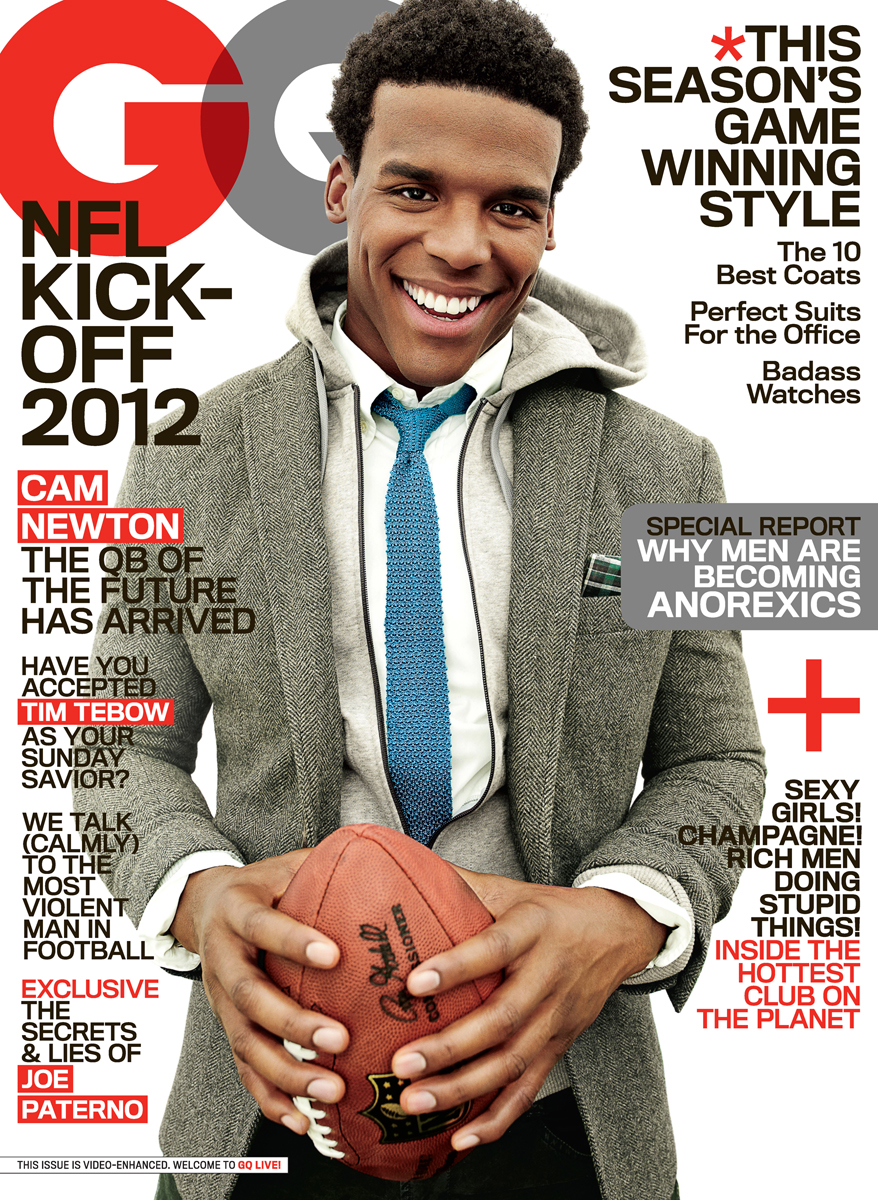
This GQ magazine shows a magazine that includes different articles about; NFL Football, Styling coats, Male anorexics, "Sexy girls with champagne!" and more. It takes a colour scheme of red, white and grey throughout the text on the cover, This is to reel audiences in through bright, coded colours, they managed the colour scheme well which readers will find aesthetically pleasing and may contribute to readers buying the magazine.

Thursday, November 21, 2019

News and Online Media Quiz


Online News and Media Quiz (Taylor Lyons) 14/11/2019


    1. Production: the process of making a media product. Every industry has its own forms of production. 3
    2. Distribution: the process of making a media product available to audiences so that they can consume it, which includes aspects of marketing such as creating advertising campaigns. 3
    3. Circulation: The number of newspapers that have been distributed but not sold. Circulation figures are important as they are used to set advertising rates. 3


2. The typical turnaround time for print news is around 24 hours. 3


3. In the last 19 years, circulation figures have dropped significantly, this is because of the growth of online and digital media, this is commonly known as Web 2.0. In the last decade, the Sun has declined circulation figures at -9%. This is due to news being widely available online instead of newspapers. 0


The Guardian declines 75%


The Independent declines 100%


4. Wealthy Owners/Proprietors (Usually own media outlets and have power for shaping opinions using the media.) 3


5. Scott Hugh, He is the CEO of the Guardian.  0


  The Barclay brothers/Rupert Murdoch


6.  The Barclays Brothers own TDGM which own the daily mail, the daily mirror, and more. They have the power to shape public opinion using media and are very wealthy. They can be seen as media barons. 3


7. The daily mail & The guardian. 0


  News Uk


  DMG Media


8. Both newspapers are involved in political events and have the power the shape opinions and mock other Parties. The daily mail is a far right wing newspaper, this means that they are biased towards the conservatives and UKIP, This leads them to make stories that make readers in favour of the right wing. This causes a political affiliation as The Guardian are a left wing newspaper that are in favour of the labour party and mildly communist. 0


9. Socialism is a political and economic theory of social organization which advocates that the means of production, distribution, and exchange should be owned or regulated by the community as a whole. 5


10. Capitalism is an economic and political system in which a country's trade and industry are controlled by private owners for profit, rather than by the state. 5


11. Newspapers owners and organisations are aware of their ability to shape the public opinion with their say. A newspaper that favours right wing can mock any left wing views to make the readers think that the right wing is the party to vote for and be in favour for, this has a big impact on any political events. The same can be done by any left wing favoured newspapers. The newspapers are able to ‘Cultivate’ different views in any political sense or with other topics that are not political. 3


12. The Guardian’s print subscription cost is £5.99/Month. 3


  £11.99


13. The Mail’s print subscription is £10.99/Month, and it has no digital subscription. 3


14. The Guardians newspaper print cost is £2 while the Mail’s newspaper print cost is 65p. 0


  Guardian = £.20


  Daily Mail = 70p


15. Modern print news is created using a method called offset printing. Offset printing is a commonly used printing technique in which the inked image is transferred from a plate to a rubber blanket, then to the printing surface. They require large amounts of material. This method requires highly skilled and trained employees. 1


Thursday, October 10, 2019

Radio Station Research

Radio Station Research (Homework)
"I will research 2 radio stations targetted for young and older audiences and define how the content is different by program presenter and music types. Where possible, I will use uses and gratification."


Capital FM:
See the source imageCapital is a modern radio station that is mostly listened to by audiences of a young age because it has very lively presenters.
 - Capital breakfast includes Roman Kemp, Vick Hope & Sonny Jay
 - Will Manning
 - Aimee Vivian
 - Ant Payne
 - Jimmy Hill
 - Marvin Humes
 - Lauren Layfield
 - JJ
 - The Bassman
 - Will Cozen
 - Rob Howard

Classic FM
Classic FM:
Classic is an old-school radio station that plays classical music and tends to be listened to by the older generation as classical music is harder to find nowadays as there arent many classical artists that still make music today. It also can be listened to by younger people but this is not very regular as younger people are more interested in popular modern music, This not a stereotype but a fact as Capital FM is very popular with younger people where as Classic FM does not have too many viewers and very rarely are they younger people.

Radio consumption survey analysis

Radio consumption survey analysis
How old are you?
41% of the people who took the survey are from 13-17 years old. This is because the survey was mostly sent to friends around our age.


What gender do you identify with?
57% of the people are also female (Compared to 42% male) because there is only 1 male in our group so the survey was sent to their friends which are mostly female.

What is your ethnicity?
88% of the people are White British as most of the friends/family of the group are White british.
What is your region?
57% of the people who took the survey are from Essex becasue we are mostly all based in Essex which means our friends or family that were sent the survey are mostly near.
Which of these applies to you? (What social class are you?)
The majority of the people are working class (48%) or middle class (45%). This may relate to people not being able to afford different methods of listenig to music. But most likely, It is because there is a higher percentage of people in the working or middle class in the UK.

Do you listen to the radio?
81% of people who took the survey listen to the radio compared to 19% who don't. These answers could have multiple different reasons.
If Yes, What station primarily? (What radio stations do you listen to?)
Heart radio is the most popular station from this survey at 16%. With Capital next at 13% and Radio 1 at 10%. This is mosty likely becasue these are the most known/popular stations becasue they play popular music that a majority of people like.
How do you listen to the radio primarily? (What method? Car, Phone, Etc.)
The majority (66%) of people listen to the radio in the car, This most likely becasue most cars have radios built in, even old cars, and people would rather let the radio play music rather than take the ffort to choose songs for their journey. However, people do this very often, this is most likely what the 12% of people who put 'I dont listen to the radio' like to do instead.
How often do you listen to the Radio?
The options 'Every day' and 'A few times a week' are tied at 33% as this is most likely the amount of time people spend in a car as that was the most popular option in the previous question and matches up with how often people regularly use their car or are in their parents car.
If you do not listen to the radio, Why?
The majority of people (73%) put 'i do listen to the radio' which matches with previous results. I think that the people who use 'Alternative mtehods' (27%) are the ones who will put the effort in to listen to their own music, This may be becasue they just really like music, or they have the extra money to use different methods, however this is unlikely because alternatives to radio are not very expensive.

Understanding Audiences


audience research task.                                                               08/10/2019

Aim:  Recognise the significance of audience in the construction of media texts.


Know:
  • a range of audience segmentation models.
  • How to construct an audience survey.
  • Organisations which survey audience consumption patterns
Do:

  • Define audience
  • Analyse how media texts are constructed to suit an audience needs
  • Record audience segmentation models.
  • Create an audience survey on music consumption patterns.
Show:
  • Evidence of completion of the survey.
  • Evidence of analysis of commercial versus public service broadcasting using RAJAR statistics.
Improve:
  • Review student understanding of (LIAR)
  • The media framework.
Know significance of audience .
 
Understanding audience is an important aspect of media studies.  Every media product has a target audience.  You will create an audience research survey linked to radio consumption.   To do this you will apply the socio-economic model (GEARS) to devise a ten question survey.   your task is to find out how different social groups listen to the radio and for how long.   You will determine what proportion of the audience listen to an agreed list of radio stations which you think might be targeted to younger and older listeners.   You must as part of the survey include Radio 1.    Whilst two separate groups will devise the questionnaire you will combine the best questions as one group questionnaire.   You will present the questions into survey monkey and then try to survey at least one hundred contacts..  (as a class).   This will mean that you will need to circulate the questions to friends and family.
It is important that you have collated the survey before Thursday’s lesson as you need to analyse the data on that day.
As part of this assessment you are expected to ask a broad range of people based on the audience segmentation model GEARS.  This is required so that  you can determine how different audiences have different consumption habits you will apply Gears. GEARS is an acronym which stands for:
Gender
Ethnicity
Age
Region
Socio economic


Young & Rubicanm 4 Cs Model:       
4 main categories are MARS
- Mainstreamers, Aspirers, Reformers, Succeeders


The other categories to be added to this are ERS
 - Explorer, Resigned, Struggler

Louis Vuitton:
The Succeeder, Becasue it is a high end, prestige brand that people purchase for self confidence and to occupy position sof responsibility in society.
Apple:
The Explorer, Because it
Kelloggs:

Ethical brands: